





Navigate the Pay Transparency Directive with confidence
The Pay transparency directive is more than a legal checklist. It is about building structure, empowering managers, and fostering trust within your organisation, in a way that works for your business. We continually develop Hailey to ensure you always have the right tools, wherever you are on that journey.
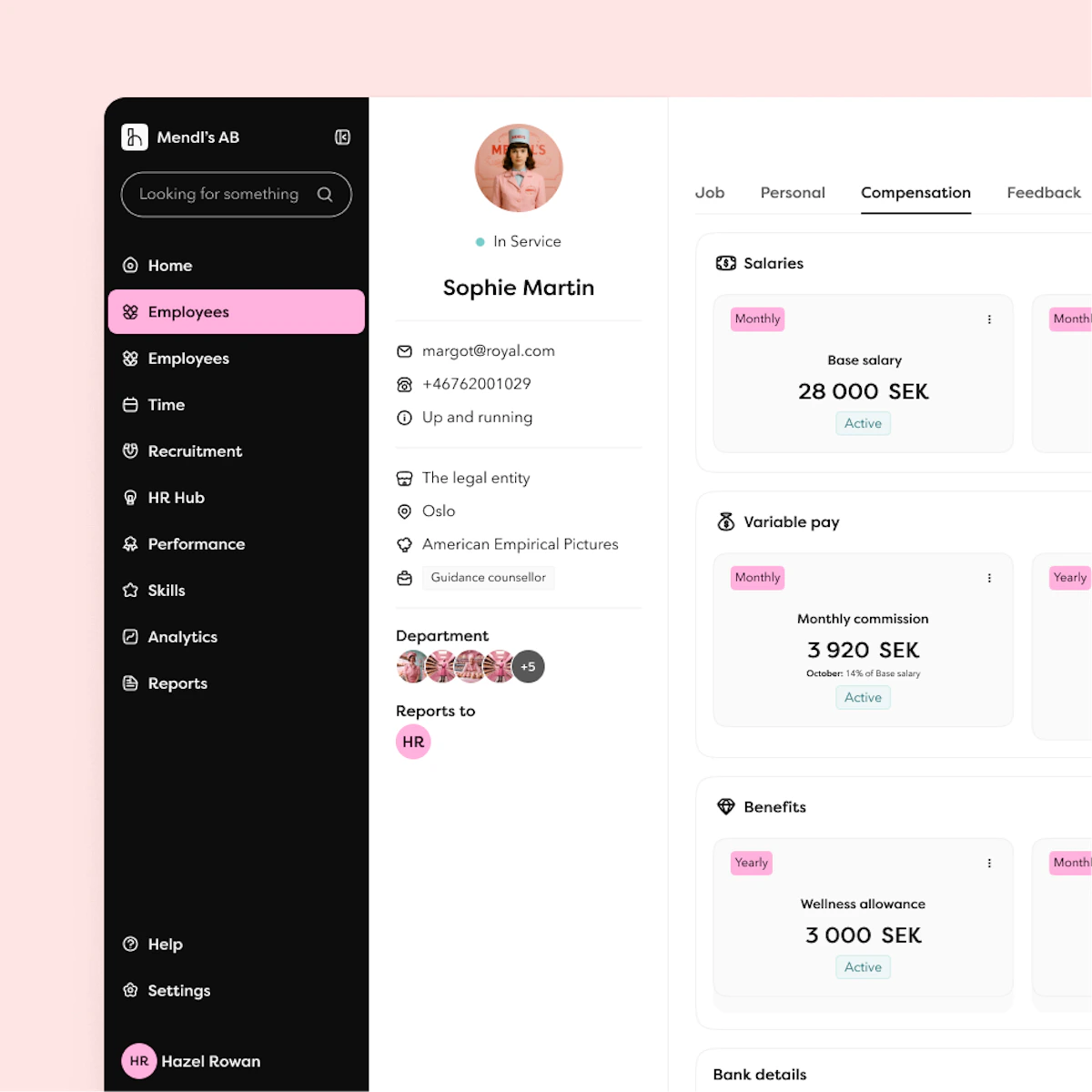
What is the Pay Transparency Directive?
The EU Pay Transparency Directive (2023/970) aims to close the gender pay gap, which, despite decades of effort, still stands at around 14% across the EU. The directive is a significant tool for bringing these disparities to light and placing clear obligations on employers to act.
As an employer, the directive requires you to:
- Conduct annual pay audits
- Report pay differentials
- Be transparent about pay criteria and salary ranges
- Share information with both candidates and employees
- Cooperate with employee representatives
Companies that fail to comply risk financial penalties, fines, and discrimination compensation. Where discrimination is established, retroactive pay, benefits, and pension contributions may also be sought.
Implementation across member states
Unlike an EU regulation such as GDPR, an EU directive does not apply directly across member states. Each country must therefore adapt its national legislation to meet the directive's requirements, and companies are not bound by the new rules until that legislation has come into force. The pace of implementation varies between member states and has in several cases fallen behind the EU's original timeline. We are monitoring developments closely and continuously building new features to ensure our customers have comprehensive support as reporting requirements come into effect.
Employees' right to information
Employees who don't understand how their salary is determined will lose motivation and trust, regardless of whether the decisions themselves are well-founded.
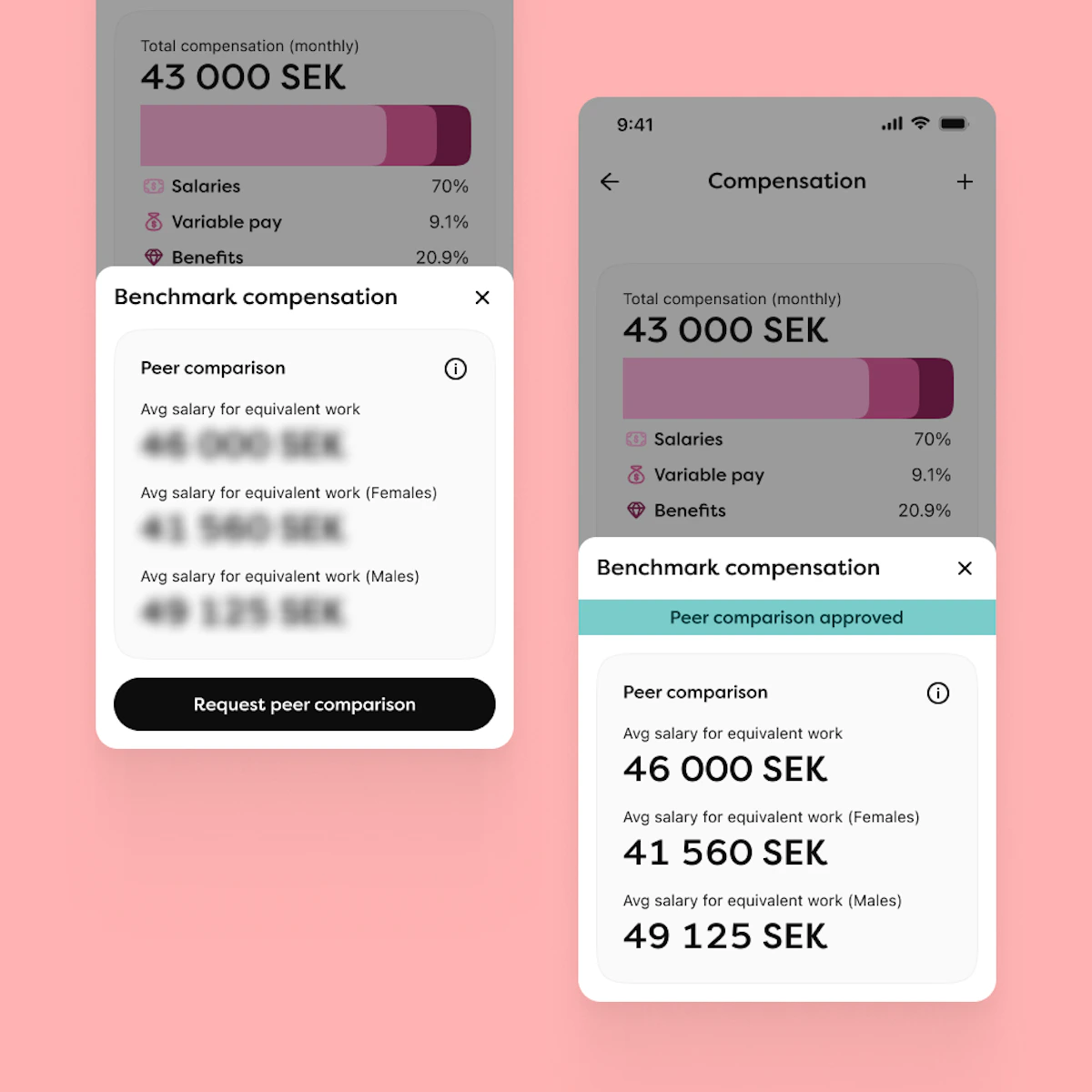
Under the directive, employees have the right to request average pay data for equivalent roles. When those questions come up, you need to be ready. That means having accurate data, clear pay criteria, and managers who can hold a constructive conversation about pay differences.
In Hailey, you have the tools to:
- Document pay criteria and pay-setting processes on the company page, accessible to the right people
- Use the pay survey to provide the underlying data when an employee requests information about average pay for their equivalent group
- Send the annual reminder of employees' right to information easily via recurring workflows, direct tasks, or news articles
Upcoming functionality includes a dedicated feature allowing employees to submit requests, and HR to share, pay and equivalent group data — based on the pay audit findings. →
Pay survey, the foundation for reporting
For many organisations, the pay survey is a resource-intensive task to tackle. Without a clear role and pay structure in place, it's hard to get it right — and pulling all the data together takes time. That's exactly the kind of structure the directive is pushing organisations to build.
Hailey is built to make that process manageable, with all employee data gathered in one place.
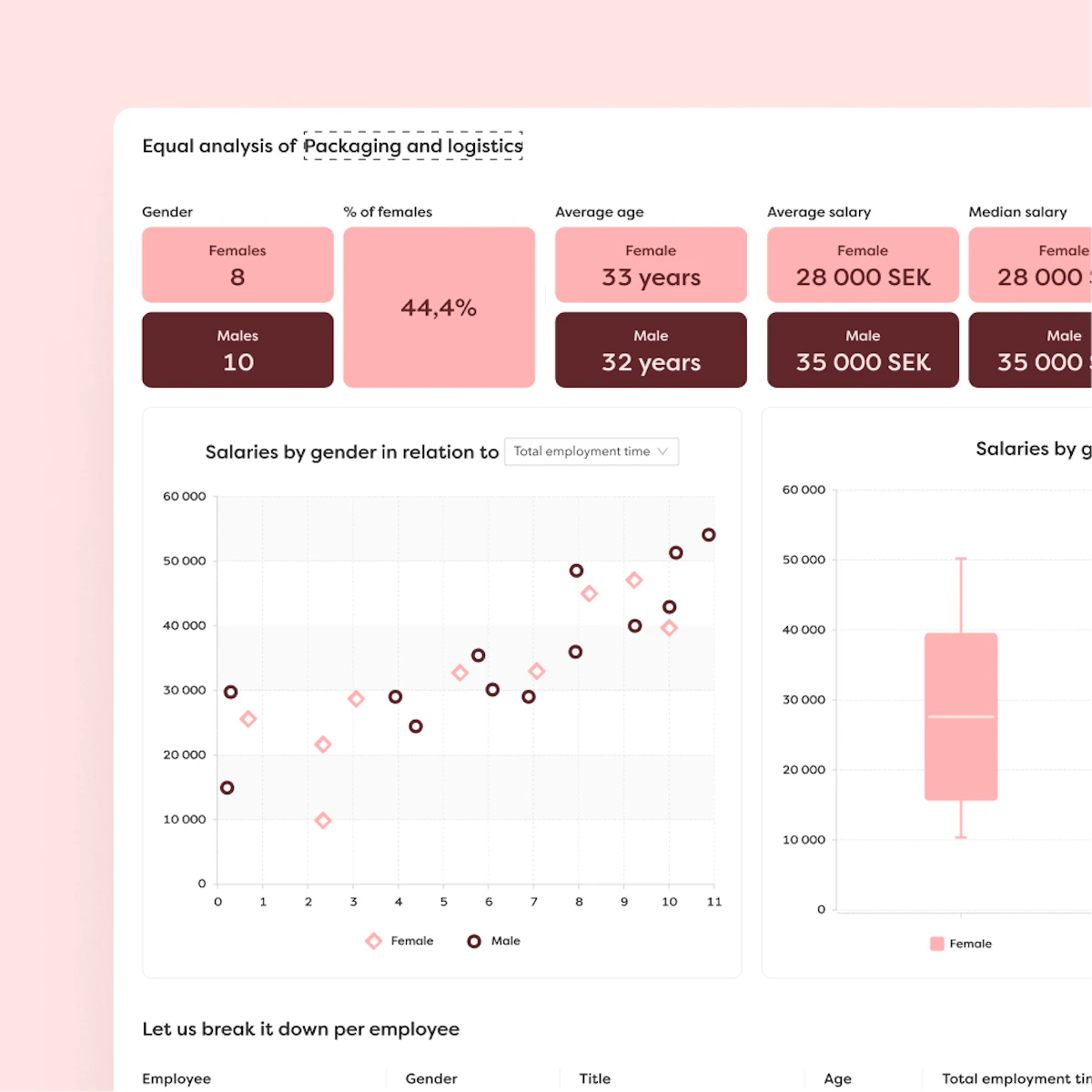
With the pay survey in Hailey, you can:
- Identify pay differences in monthly salaries between the genders
- Follow up and document actions over time
- Analyse the proportion of women and men performing equal or equivalent work.
With that foundation in place, we are continuing to develop the feature to support the full picture of compensation:
- Incorporating variable pay components, benefits, hourly salaries and part-time salaries.
- Job evaluation and role structures will have an enhanced, central place in Hailey: Available as a standalone feature and seamlessly integrated into the pay survey
Pay Reporting: With the right structure in place, pay reporting becomes a natural outcome of the work you have already done.
Recruitment
In recruitments, salary discussions are moving to an earlier stage in the process. As an employer, you can choose how to approach requirements stipulating that:
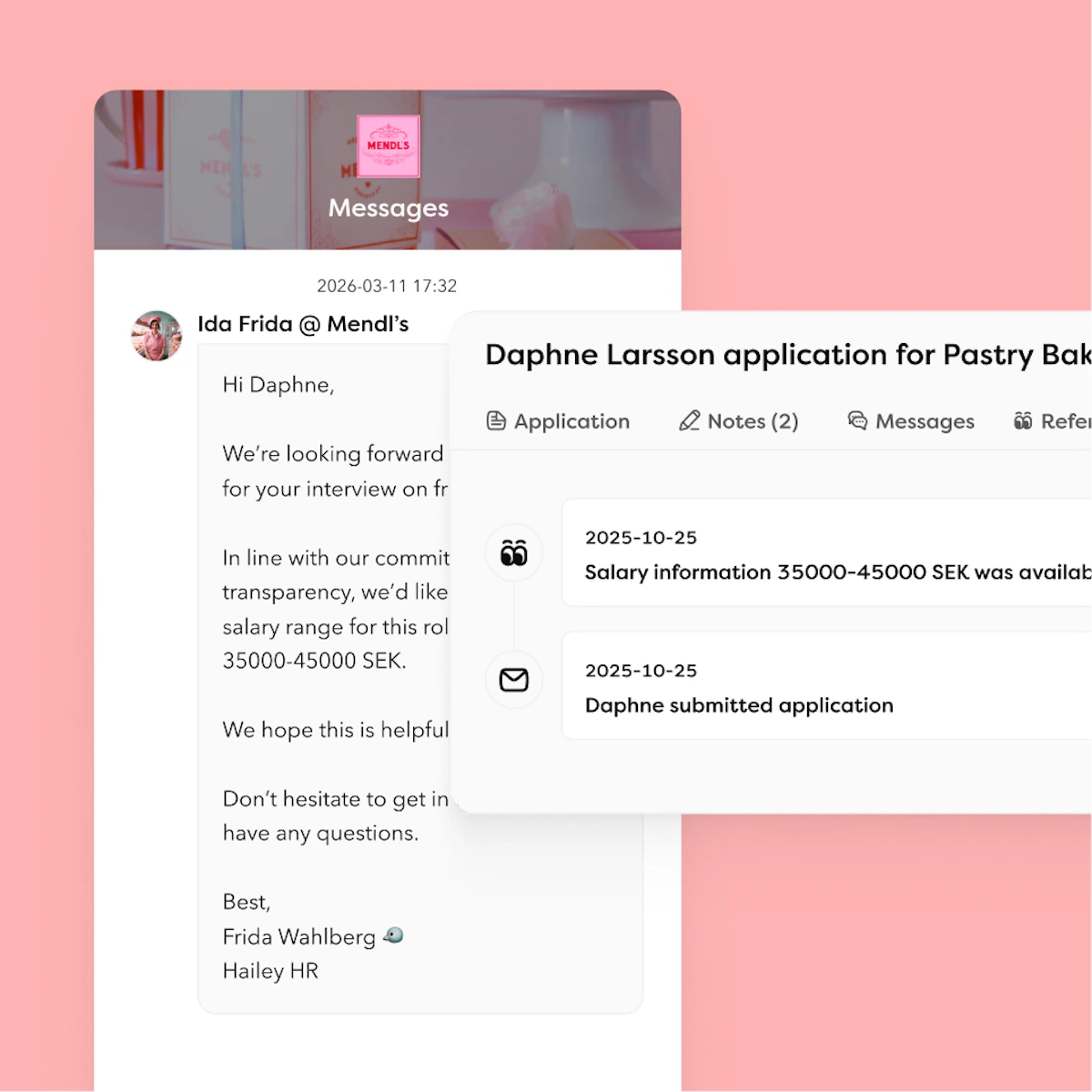
- Candidates must be informed of the starting salary or salary range in good time before any pay negotiation
- Employers may not ask candidates about their previous salary
- Job adverts and job titles must be gender-neutral
Communicating salary openly is, for many organisations, as much a cultural step as a legal one. But employers who take that step with confidence also have an opportunity to strengthen their employer brand in an increasingly competitive recruitment market.
In Hailey, you can choose to include salaries directly in the job ads. However you choose to handle it, the candidate overview gives you a dedicated space to record what was communicated, when and how.